You bring the technical idea.

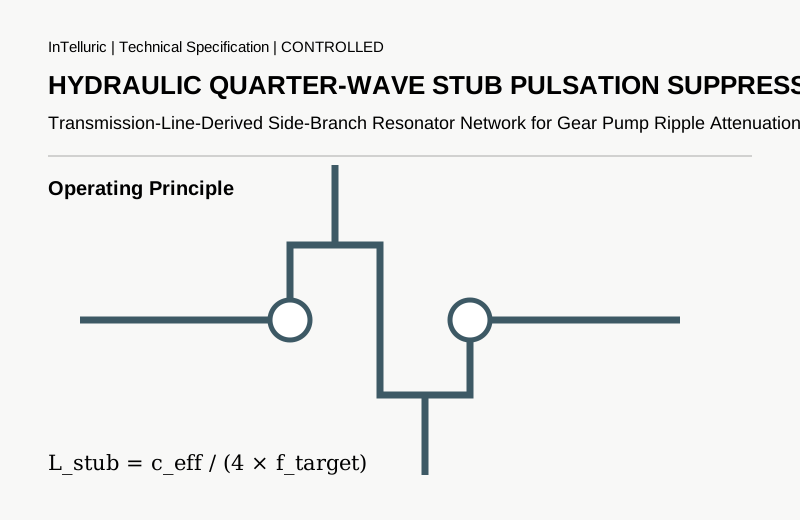
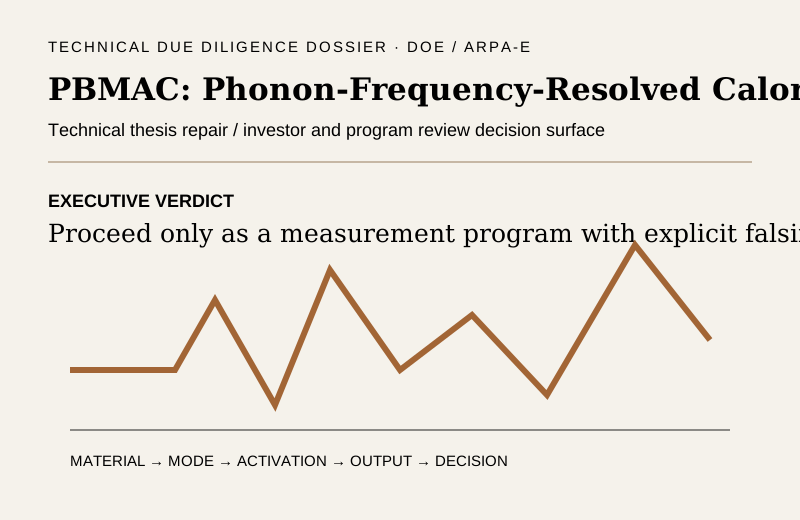
Step 1: rough sketch labeled 'owl'. Step 2: engineering schematic — OWL-7X Cybernetic Recon Unit with sensor suite, neural net accelerator, flight systems, power core.

We draw the rest of it.

No one funds, manufactures, or patents uncertainty. InTelluric turns rough technical intent into the artifact your next gate requires: proposal, spec, diligence pack, patent handoff, architecture, or build plan.

Confidential by default · No training use · No subcontractor exposure · Client owns commissioned artifact after payment

Built for

Technical founders, PIs, grant teams, patent-adjacent inventors, engineering leads, and deep-tech operators whose idea is real but not yet reviewer-ready.

Used when

A proposal, investor, attorney, program officer, technical lead, or manufacturer is about to judge the work. Also used by investors and advisors who need an independent technical read on materials they’ve received before committing capital or counsel.

Where do you need to go?

More specific situations

Self-Diagnosis

Situation What you have How far along What's broken Funding Result

What are you trying to survive?

Loading diagnostic engine…

Skip quiz — browse the full artifact catalog ↓

You need:

What You'll Need

Diagnosis

Gate
Primary risk

What to Send

What Comes Back

This Enables

  • Deciding what must change before the gate
  • Briefing a PI, technical writer, or internal reviewer
  • Handing off to a writer or specialist to execute

Artifact Catalog

Browse by project type. Select audience boxes to highlight the artifacts that matter most for your reviewers. Mark what you need — the tier calculator below will scope your engagement.

Select an artifact to view details.

Mark artifacts as needed above to see your tier and scope.

Ambiguity Tiers

Price follows ambiguity absorbed.

The artifact tells you what needs to exist. The tier tells you how far InTelluric has to carry it from where it is now.

Beeline
The target is close. The material is mostly there.

Use this when you already have the content, but need it converted into the artifact someone else can actually use.

Best for
Independent projects, invention writeups, basic patent handoffs, preliminary specs, short proposal conversions
Ambiguity absorbed
Format, structure, audience translation
Output mode
Bounded conversion
Typical turnaround
~1 week
Budget: under $1,000
Hawkeye
The path is straight, but the shot is longer.

Use this when the gate is real: SBIR, ARPA, NSF, NIH, internal review, program officer, technical committee. The idea exists, but the claims need to survive contact with reviewers.

Best for
Grant narratives, technical coherence repair, milestone traceability, reviewer-facing argument structure
Ambiguity absorbed
Claim support, mechanism clarity, evidence gaps
Output mode
Precision under review pressure
Typical turnaround
~1 week
Budget: under $5,000
Sharktank
The environment pushes back.

Use this when the artifact has to make a skeptical person believe the project is possible before the machine exists.

Best for
Investor diligence, pitch decks, crowdfunding technical narratives, patent sketches, hostile-review repair
Ambiguity absorbed
IP gaps, mechanism risk, missing engineering structure, credibility pressure
Output mode
Pressure-resistant technical case
Typical turnaround
~1 week
Budget: under $10,000
Skunkworks
The reference point is weak or absent.

Use this when the request is not "format this" but "figure out what this even has to become." Intent, constraints, and outcome are enough. The job is to derive the mechanism, architecture, build path, and validation plan.

Best for
Undefined systems, experimental architectures, novel mechanisms, executive mandates, impossible-sounding technical requests
Ambiguity absorbed
First principles, mechanism derivation, architecture, test logic
Output mode
Compressed R&D cycle
Typical turnaround
Custom per engagement
Budget: quoted per engagement

Budget figures are approximate. Final scope is set per engagement.

Who does this work

InTelluric engagements are directed by a single operator — not a team of writers, not a subcontracted firm. Every material you submit is handled by the same person who built the method and understands both the technical content and the reviewer who must accept it.

Engagement types

  • Deep-tech grant narratives: SBIR/STTR, NSF, ARPA-E, DOE, DARPA
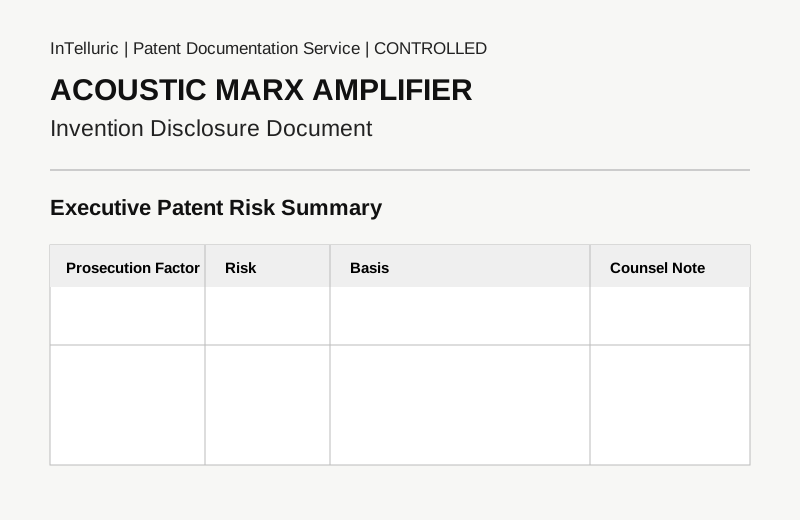
  • Patent handoffs and invention documentation
  • Investor diligence and pitch packet preparation
  • Adversarial technical review and red-team hardening
  • Manufacturing feasibility and prototype bridge documents

Technical domain depth

  • Advanced materials, ceramics, and process-structure relationships
  • Electromagnetic systems and rotating near-field theory
  • Computational optimization and control architecture
  • Experimental characterization and validation logic

Direct contact: [email protected]

Method

The method is a compiler pipeline. Each station takes a defined input, performs a named operation, catches a specific fault class, and produces a typed output. The process is procedural, not editorial.

01
Evidence Intake
Input
Draft, notes, figures, constraints, prior comments
Operation
Inventory existing material against gate requirements
Fault caught
Scope misidentification, missing gate awareness
Output
Material map + gap list
02
Claim Extraction
Input
Draft language, notes, intended outcomes
Operation
Separate technical claims from persuasion and unsupported assertion
Fault caught
Claims without mechanism, boundary condition, or evidence
Output
Claim inventory ready for evidence mapping
03
Mechanism Audit
Input
Claim inventory + technical description
Operation
Verify each claim has a traceable physical mechanism
Fault caught
Mechanism assumed but not specified; outcome described, not caused
Output
Mechanism-to-claim map; unresolved mechanism list
04
Evidence / Gap Matrix
Input
Mechanism map + available evidence
Operation
Map each mechanism to supporting evidence; flag unsupported paths
Fault caught
Reviewer risk from missing evidence or boundary conditions
Output
Claim-evidence-gap matrix; reviewer risk register
05
Milestone Repair
Input
Gap matrix + gate timeline
Operation
Translate evidence gaps into testable milestone tasks
Fault caught
Vague milestones; milestones without test criteria
Output
Prioritized repair list; milestone-to-evidence path
06
Deliverable Output
Input
Repaired structure + audience + gate format
Operation
Render artifact in the format required by the next actor
Fault caught
Audience mismatch; format non-compliance
Output
Decision surface — transferable to the next actor

Before / After

What the repair looks like. Each card is a real engagement condensed to its essential transformation.

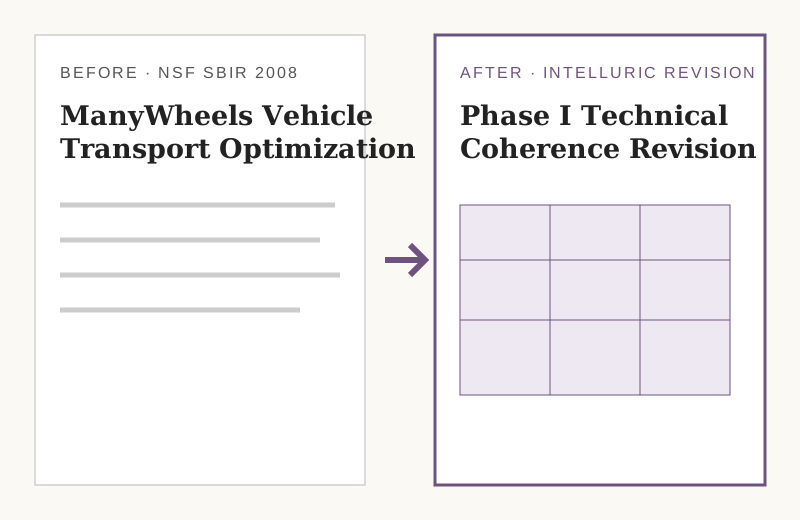
NSF SBIR / Coherence Repair
BeforeNSF proposal framed around market validation
ProblemIntellectual merit underdeveloped; reviewers exposed to unsupported mechanism claims
RepairReframed as algorithmic research contribution with measurable Phase I milestones and mechanism chain
ArtifactTechnical coherence repair
Useful forSBIR/STTR, NSF, technical-volume repair
Full provision →
SBIR / Pre-Submission Coherence · Medical device / NIH
BeforeSBIR draft with mechanism claims not supported by cited evidence
ProblemTechnical coherence gaps exposed to reviewer scrutiny; objection surface unmapped
RepairClaim-evidence-reviewer-risk map; flagged gaps and repair priorities delivered before submission
ArtifactPre-submission coherence review
Useful forSBIR pre-submission, grant technical prep, reviewer-risk reduction
Full provision →
DOE / ARPA-E Technical Repair
BeforeDOE/ARPA-E concept with vague milestone structure and risk framing not legible to review panel
ProblemMilestones lacked test criteria; risk items too vague for program officer
RepairAdvocacy-to-measurement reframing; milestone-to-evidence repair structure; risk register formatted for program officer consumption
ArtifactGrant technical repair memo
Useful forDOE/ARPA-E, program office submissions, milestone repair
Full provision →
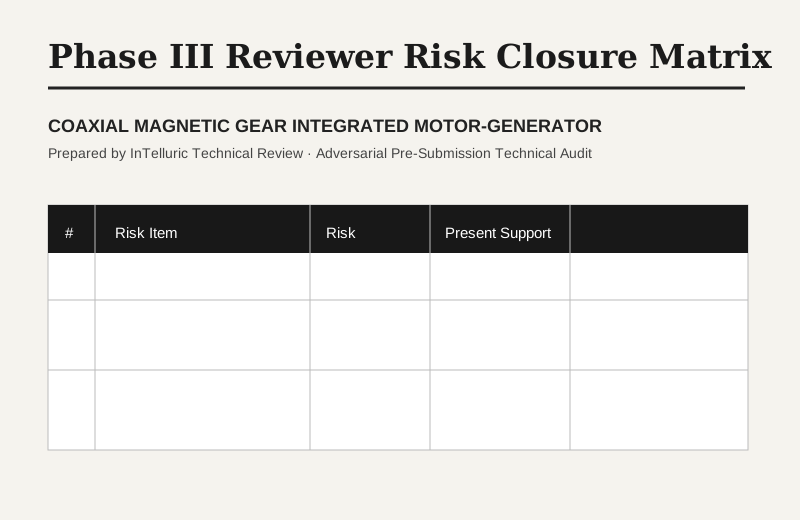
DoD / Red Team Preparation
BeforeTechnical concept unprepared for adversarial DoD review; mechanism claims not pressure-tested
ProblemVulnerable to red-team objection on mechanism and feasibility grounds
RepairDecision package with hardened technical case, objection map, and reviewer-risk register
ArtifactRed team review / adversarial defense package
Useful forDoD proposals, adversarial review preparation, defense-phase diligence
Full provision →

Provisions

Public examples of the work. Each entry shows the problem class, what was produced, what the conversion looked like, and who it was for. These are excerpts — not submitted deliverables — made available so the method is visible before any commitment is made.

Grant / Technical Repair

DOE / ARPA-E Repair Memo

Problem class Grant technical repair
Conversion Concept + draft → milestone/risk repair structure
Audience Reviewer / PI
Status Public provision
View provision →
SBIR / Coherence Review

AURA SBIR Coherence Review

Problem class Pre-submission technical coherence
Conversion Draft → claim-evidence-reviewer-risk map
Audience SBIR technical reviewer
Status Public provision
View provision →
DoD / Red Team Review

THGM DoD Red Team Review

Problem class Adversarial technical review prep
Conversion Technical concept → hardened decision package
Audience DoD review board
Status Public provision
View provision →
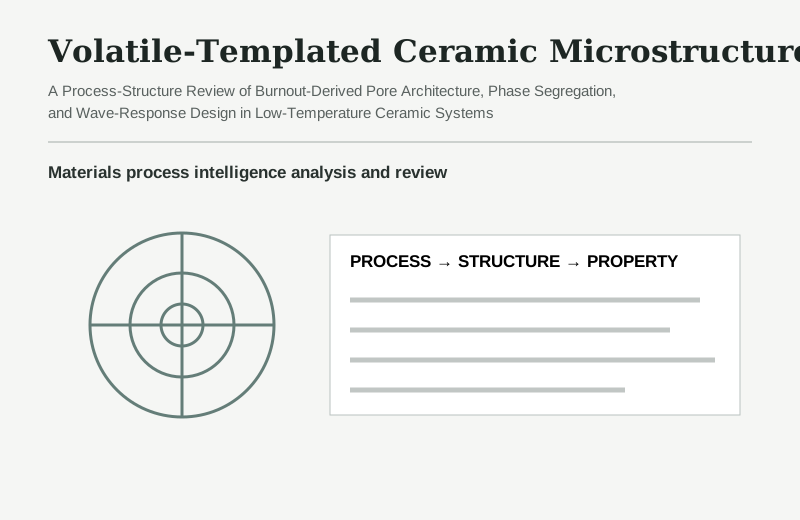
Concept Brief

Volatile-Templated Ceramics Concept Brief

Problem class Mechanism-to-spec conversion
Conversion Process intent → bounded concept brief
Audience Program office / prototype vendor
Status Public provision
View provision →

Send Materials

No diagnosis attached — that's fine. Describe your situation in the note field below.

No hourly fog. No word-count games. No decorative documents. You are not buying pages — you are buying the missing structure. Response within one business day.